A Relationship With History

  • I KNOW A SOUND IS STILL A SOUND AROUND NO ONE///

    WOLF KINO.

    JUNE 2025. 

    THE metro from Mitte to Neukölln was muggy, much like the humid outside. My friend and I held all our limbs out and away from our bodies so as not to encourage yet another sweat stain clinging to our shirts. 

    We were on our way to Wolf Kino, where we would watch a documentary about the women’s world cup held in Mexico, across both Mexico City and Guadalajara in 1971. 

    Taking place in August and September between the qualifying countries of Denmark, Italy, England, Argentina, Mexico and France. 

    Neither of us had heard of the event before the previous evening when deciding to go to see a movie. The documentary, ‘Copa 71’ had been released in September 2023, nearly two years before and neither of us had heard of it then either. 

    > Were we not meant to know. 

    PRODUCED by Venus and Serena Williams, a Sports Illustrated article reads that the film would feature ‘never before seen’ video footage of the football the six women’s teams played. 

    Walking from the metro, we step into the wonderfully chilled cinema, goosebumps running up our arms in relief from the heat. We take our seats in one of their two screens, alone but for one other spectator. And the 1999 women’s world cup winner Brandi Chastain came on the screen. The directors of the documentary had set up a screen for her with some of this never before seen footage and Chastain expressed surprise as she had never heard of ‘Copa 71’ either. 

    From here, the documentary follows women’s football as it was leading up to the non FIFA affiliated 1971 Cup. It would then go on to show that these six national teams got together to play the cup in Mexico despite having no institutional backing from the likes of FIFA. And the focal point of the documentary would be the interviews with women who had played on these national teams as they recalled with vivid detail their experiences playing football in this Cup. 

    > Why do you play football? 

    > Why would you like to know?

    EXPERTS called into the documentary to give comment explain very well the turmoil women’s football was in, with relation to the organisation FIFA (Fédération Internationale de Football Association). According to their Britannica definition, FIFA is the body which ‘sets the rules of play,’ and ‘establishes standard for refereeing and coaching,’ all while organising the ‘World Cup (both men and women’s).’ Being such a pervasive organisation in football, FIFA hardly even needs introduction. However, it is useful to consider how FIFA is defined now when viewing it within the context of its past actions. The FIFA of 1971 did not at all organise the women’s world cup taking place in Mexico, the documentary displaying how FIFA greatly opposed this tournament.  

    When Peter Bradshaw reviewed ‘Copa 71’ for The Guardian in March 2024, he wrote that nothing FIFA or the UK’s football organisations did was ever so ‘spiteful, sexist and dishonest’ as the way they treated the Women’s World Cup of 1971 held ‘outside FIFA’s pompous auspices.’ 

    Women’s football was unsurprisingly under attack throughout the twentieth century. The documentary highlights the ban from professional pitches that England enforced against women in 1921, the mockery that women across Europe and Latin America – where the documentary focuses upon – faced when playing the game. 

    And working from a year old memory, the documentary explained the further crackdown on women’s football which the European teams experienced when returning from the games in September 1971. The former teammates who were interviewed recalled not receiving any praise or attention like they had in Mexico, just an honest wish for it to appear like it had never happened at all. 

    AND though this was all interesting in itself, what captivated me the most were what the women interviewed truly remembered. 

    Those who stuck out most to my friend and I were the two Danish players, Ann Stengard and Birte Kjems who interviewed together and said several times when asked about the sexism they faced that they just ‘liked football so we played football.’ Commenting on the games fifty years later, their recollection was level and warm. 

    The Italian team’s dynamic came through vividly in the interviews given by three players in particular. The intense Italian player Elena Schiavo – who had enthralled her entire team – spoke about her relationship with football, her recollection of the game. Two other Italian players spoke at length about this intense teammate of theirs, about how her body was so powerful, how you simply knew when she was angry with you, and about how tough she was to deal with if they lost a game. They recalled how she could make you feel special. Remembering their relationships with each other so clearly after the time that had gone by. 

    The Mexican teammate Silvia Zaragoza laughed when the crew told her how the Argentinian teammates they interviewed were still bitter about Mexico winning their game. Thinking they were favoured as the cup was played in their home country, Zaragoza remembered the uproar Argentina’s loss caused with clarity. 

    Each of them spoke about how it felt travelling to as far away as Mexico, the surprise and excitement of being in front of such monumental crowds. 

    A PERSPECTIVE pushed throughout the documentary was that nobody knew about these games happening in Mexico. That nobody since has learned about them. 

    Just how many people went is unknown as the numbers vary greatly between vastly different sources, the Sports Illustrated and Guardian articles mention different numbers, the Wikipedia page and others like University of Manchester’s ‘Women in Sport’ page also differ.

    Taking each number into account, it looks like anywhere from 90,000 to 112,500 spectators were at the final game in the Azteca Stadium, Mexico City. 

    When contrasting the tone of the documentary, this was a surprising fact to find out particularly when taking into account the passion of the women involved and their recollection of the games during their interviews. 

    This brought up several questions for me:

    > Who actually gets to decide what is ‘revealed’ in history? 

    > Did the tenth of a million spectators forget about it? 

    > Did the teams forget? 

    > Was this event not ‘revealed’ by the women who played time and time again in their personal lives? 

    TAKING this difference in narratives between the actual women who experienced the games and the documentary filmmakers, I felt compelled to consider the method the documentarians used to collect the women’s stories. Using interviews to extract their memories I would consider an oral history collection. 

    Oral histories can be here defined as histories which are often collected through an interview format. These interviews are recorded and in the context of historical collection will often be transcribed for use in historical research. Oral history practice is particularly useful in collecting the stories and memories of those who would not leave a written record and for this reason is a useful way to engage in women’s histories. 

    Six years after the women had played the Azteca and Jalisco stadiums in Mexico, the Women’s Studies journal Frontiers (University of Nebraska) published their Summer 1977 issue on the topic of women’s oral histories. 

    And on a packed train with the sun glaring at me from behind [May 2026] I read Sherra Gluck’s introductory article to this issue. Squinting my eyes, it introduced the tone of the issue and reminded me of the questions I had regarding ‘Copa 71.’ Gluck’s introduction is important to this Frontiers issue as she provides context to what the reader should be thinking about while they go through the other articles, much like how the documentarians’ perspective impressed upon the Copa 71 viewers. 

    > What do we want people to remember? 

    > How do we like to frame things?

    GLUCK’S What’s So Special About Women? Women’s Oral History pointed out the ‘reciprocal affirmation’ which the interviewer bestows upon the interviewee when collecting oral histories. This recognises that the interviewer’s interest is the axis from which the interview will hang. She further goes on to state that an interviewer, though inevitably biased themselves, ought to put effort into balancing what they personally think is important about the women and what the women themselves think is interesting. 

    The women, at the time of the interview, had aged fifty years since their games. And despite this time that had passed they spoke of their experience from memory with assuredness. 

    From this I struggled to believe that everyone in their lives did not know about the remarkable sport they played. It feels unimaginable and untrue that the hundred thousand attendees had never uttered a word about what they had seen in August and September of 1971. That the stories of watching the women play had not been spoken aloud and made into memories for person after person. From attendee to rememberees. 

    It even seems reasonable to believe that those at the time who were against organised women’s sports raged about the 1971 Women’s World Cup taking place, and that those who they raged to would have remembered this. 

    This importance which the documentary placed on official institutions like FIFA’s recognition of the world cup felt displaced. 

    > Do we only value histories written down? 

    > Do we only value histories written down by institutions? 

    THIS documentary surely introduced many more than myself and Brandi Chastain to the games, and brought up several questions about what is valued in history and what is desired from historical sources.

    >Who we want our historical source to be for one: Would you rather listen to someone who went to the game or wait until it is recognised by FIFA?

    >Where we want our historical information to come from: Would it be more inspiring seeing it in the FIFA museum or is experience through memory good enough?

    ‘ORAL HISTORY is not, nor should it be, the province of experts,’ Gluck wrote, and that ‘anyone who can listen to the women who are speaking can do oral history.’ 

    THE INTERVIEWS were striking in the documentary. Leaving a viewer helpless but to notice the teammates’ experiences not purely in their struggles against patriarchal institutions and societal conceptions, but looking at them holistically. They articulated their desires – for each other, for the game they were playing; Their interactions with the people they met through the game. 

    In many ways they spoke the most, asking loudly: Who exactly was this history unspoken for?

    The resources I used: 

    My memory the very primary source. 

    Copa 71 (2023). 

    Matthew Hall for The Guardian (8 September 2023) https://www.theguardian.com/football/2023/sep/08/copa-71-when-112500-fans-packed-out-the-unofficial-womens-world-cup-final

    Peter Bradshaw for The Guardian (6 March 2024) 

    https://www.theguardian.com/film/2024/mar/06/copa-71-review-riveting-story-of-womens-world-cup-goes-way-beyond-football

    Madison Williams for Sports Illustrated (19 February 2023) https://www.si.com/extra-mustard/2023/02/19/serena-venus-williams-produce-film-1971-womens-soccer-world-cup 

    Britannica Online ‘FIFA’ https://www.britannica.com/topic/Federation-Internationale-de-Football-Association (As of 16 June 2026)

    Frontiers: A Journal of Women’s Studies, Summer 1977 Vol. 2, No. 2 ‘What’s So Special Abour Women? Women’s Oral History’ by Sherna Gluck (1977). Accessed via JStor.

  • WHEN I FINISH A MEMOIR WHERE DOES IT GO//

    WHERE do we go to receive our histories? 

    Part of my personal historical account is the list titled ‘Books read/finished 2023 :)’ that I keep as a google doc. Projecting past 2023, this list still runs in 2026 and until my ego dies or the chrome engine busts, I will probably keep it going. Each year I have started a new page of the document. And referring back to it to remember what it is I consume and reflecting on why – I came across a pattern. 

    Since I started recording what I read and how in 2023 (is it an audiobook or am I reading? Is it from the library or did I actually buy this?) – I have read fourteen memoirs. 

    With the exception of one non fiction book, they make up the only non fiction I read. 

    Now of course there are the newspaper articles, the magazines unaccounted for in this four year old document. I do consume writing which can be accounted for and referenced beyond the individual narrator. But the list I care about is the books I read and finish. Much like the memoir, I am pulling out what I like to know about myself – and like the memoir reader, you have to trust that I am telling the truth. 

    2023: 

    Notes to Self by Emilie Pine. 

    Fierce Appetites by Elizabeth Boyle. 

    All the Young Men by Ruth Coker-Burke. 

    2024: 

    Why Be Happy When You Could Be Normal by Jeanette Winterson. 

    Unfollow by Megan Phelps-Roper. 

    I Survived Capitalism and All I got was this Lousy T-Shirt by Madeline Pendleton. 

    A Place of Our Own: Six Spaces that Shaped Queer Women’s Culture by June Thomas. 

    2025: 

    The House of My Mother by Shari Franke. 

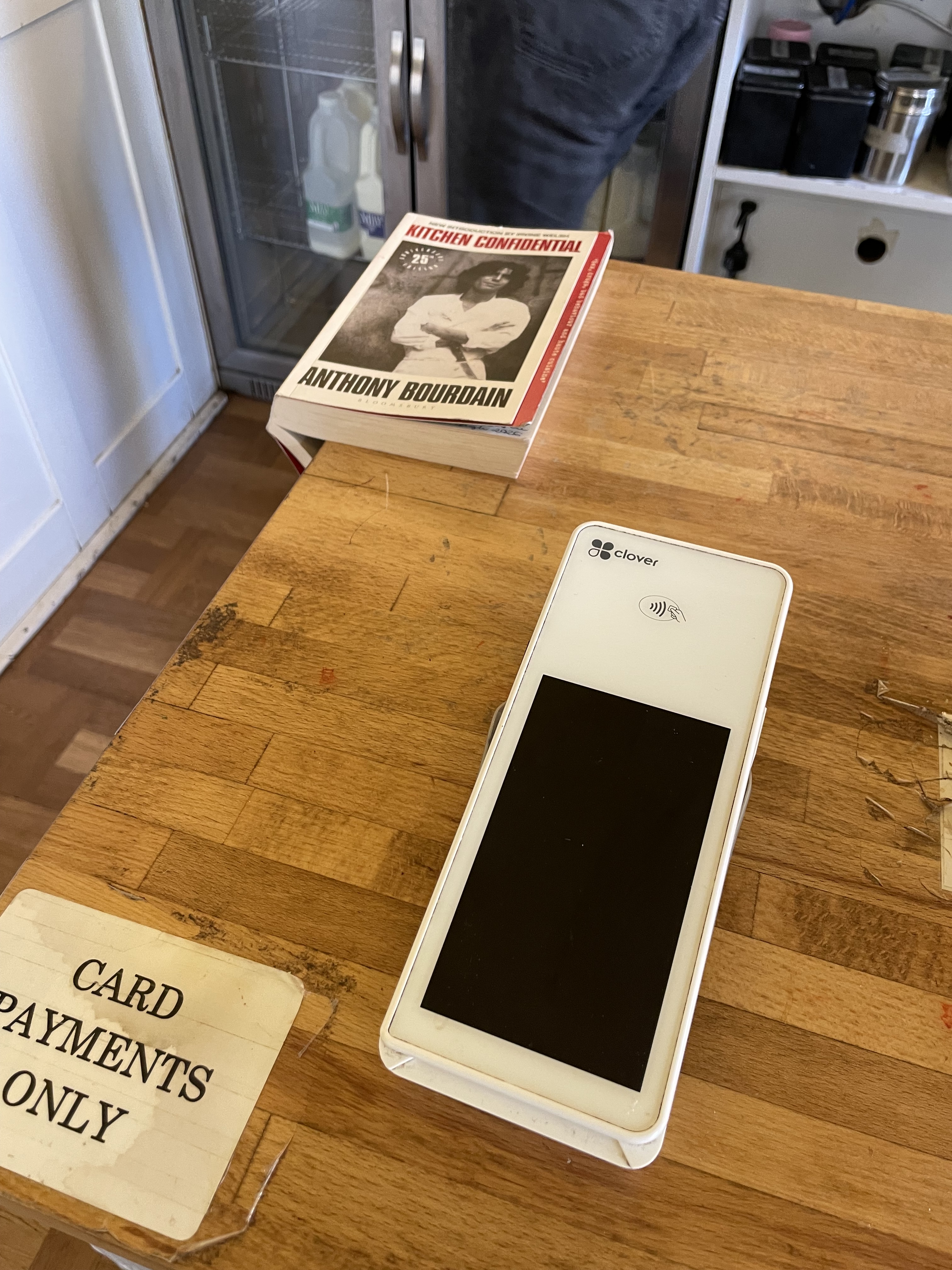
    Kitchen Confidential by Anthony Bourdain. 

    Class by Stephanie Land. 

    Rememberings by Sinead O’Connor. 

    Consent by Jill Ciment. 

    Semi Well Adjusted Despite Literally Everything by Alyson Stoner. 

    Down the Drain by Julia Fox. 

    2026: 

    All the Way to the River by Elizabeth Gilbert. 

    THE Cambridge online dictionary defines memoirs as ‘a book or other piece of writing based on the writer’s personal knowledge of famous people, places or events.’ And the online National Centre for Writing resource considers memoirs ‘a powerful form of personal storytelling that blends intimate reflection with engaging narrative.’

    The former definition seems to me to ask a lot of memoirists. It compelled me to ask the questions: Do you have to be famous already to write a memoir> Do you need to know famous people to write a decent memoir> Do you have to talk about events> What would even be considered an event>>> And consulting my list of memoirs, I did not find this set of criteria to be true. 

    Taking the second definition feels more true to my experience of memoirs and knowledge gleaned from reading them. This ‘personal storytelling’ I consider to be a more realistic way of defining a memoir. An exercise of intimate narration based on the primary eyewitness experience, memoirs answer questions and bring up questions in me that I like thinking about: 

    What does it feel like to live differently to me?  

    When do people gain clarity about their experiences?

    How important is it to be truthful about our lives>

    And if I were defining memoirs in my own language I would say they are ‘my favourite place to receive history.’

    THE first sophisticated question I remember learning to ask is how someone’s day was. 

    Now from there, there are a lot of options, and as I was in primary school when I learned this was a good question to ask, a lot of people I asked were also kids in school. 

    So a place I learned to take this was> do you like school? And if so> what is your favourite subject? 

    This line of questioning never leaves and as I started studying history with more aplomb others ask> what is your favourite part> your favourite period. 

    And unfortunately I do not have a great answer. The most truthful answer is that I only have a favourite form. I love emotional histories. Including but not limited to: What people thought about the people around them, the circumstances they lived in and how they dealt with it and most important of all> what did they feel the entire time they were experiencing everything. Memoirs get straight to the root of what I want to know, and like a desire path in my mind, they satiate a need to know more about the personal human condition. 

    Using again the National Centre for Writing, they state that ‘Memoirs often explore universal themes like love, loss, identity, and resilience, connecting the author’s unique journey with the broader human experience.’ The connection with the broader human experience is key and why I think memoirs last in my (people’s) memories. Why I think the likes of ‘Eat Pray Love’ by Elizabeth Gilbert, and ‘Educated’ by Tara Westover, ‘Wild’ by Cheryl Strayed and ‘The Glass House’ by Jeannette Walls are so enduringly popular. 

    They speak to one of the reasons I study history which is to get to know there are people living like I do or how I want to live; Feeling how I do or warning me about how I could one day feel. 

    JEANETTE Winterson’s memoir informed me people can be filled with desire so strong it makes their eyes water; Ruth Coker-Burk that people have empathy so cultivated it keeps them awake; Jill Ciment that people can reinterpret their lives over and over again. 

    Through emotional histories, authors of memoirs have taught me about their experience of the world at the time. 

    Madeline Pendleton’s memoir centred around the financial background they grew up in and how this fundamentally informed the shape of their life and the decisions they would make and were not able to make, growing into adulthood. Speaking about the global 2008 recession and the impact this had on the apparel industry in California, Pendleton’s account provides a perspective for the experiences of many working in apparel at the time. 

    June Thomas’ genre bending work defines six spaces for queer women they both were a part of and/or researched from the 1970s to present day at publication (2024). Focusing on these spaces in the UK and USA alone, Thomas brings to life the experiences of women who frequented the bars, bookshops and holiday spots established by and for queer women. This book illuminates what it felt like to have these spaces to go to, and how those who went developed alongside them. 

    I wonder how other people would talk about these books, what they gained from reading them. 

    How would others contextualise their lives? 

    Can you see yourself in other people?

    Did I connect with these books because I had somewhere to go in them>

    MAYCI Neeley from the Hulu show The Secret Lives of Mormon Wives, released her memoir ‘Told You So’ in October 2025. And based solely on my memory of watching the show, her reason for writing her experience came from a desire to reach out from the page and make other people in similar situations feel less alone. 

    This made me think about Elizabeth Boyle’s more ancient approach, referring to Irish folklore before introducing new times in her life. And I wondered if Boyle felt less alone having those stories to refer back to. And remembering this led me to thinking about a memoir by Sheila Heti I have yet to read but a concept I think about often. 

    Claire Dederer wrote a review for The Guardian of ‘Alphabetical Diaries’ by Sheila Heti. Dederer achieved writing about Heti’s memoir which is based on her own personal diaries (classic memoir source material) and compiled sentences alphabetically i.e., sentences starting with A, with B etc. Dederer described it as indeed boring but ‘a surprisingly powerful weapon against loneliness, at least for this reader.’ 

    These three women engaging with memoir materials both as authors and consumers describe the comfort people can take from memoirs. Neeley articulates wanting people to have somewhere to go, and Boyle and Dederer found somewhere. 

    DIFFERENT to the likes of any biography, census, or curated objects in a museum – the memoir stays singular to me in inspiring my desire to learn more about history. 

    Rejoicing in receiving my favourite histories in such a biased format compelled me to consider the original question> where do we go to receive our histories> what does this say about us? 

    The thoughts I have so far are that enjoying emotional history leaves me vulnerable to the feelings of those recording these emotions> And that understanding emotional histories finds me deeply comforted, as the more I engage with written, spoken and unspoken records, the more I sense I have never had an unfelt feeling. 

    Not once. 

    Thank god. 

    What does your way of engaging with history say about you> 

    The resources I used: 
    My memory - the primary source 😉
    National Centre for Writing (2026) https://nationalcentreforwriting.org.uk/writing-hub/crafting-your-memoir-a-guide-to-storytelling-reflection-and-connection/
    Cambridge Online Dictionary (2026) https://dictionary.cambridge.org/dictionary/english/memoir#google_vignette
    Claire Dederer for The Guardian (10 Feb 2024) https://www.theguardian.com/books/2024/feb/10/alphabetical-diaries-by-sheila-heti-review-easy-as-abc

  • Welcome to WordPress! This is your first post. Edit or delete it to take the first step in your blogging journey.